For entrepreneurs opening hot pot restaurants in Sydney, importing high-quality hot pot tables and beverages from China not only helps control the quality of the restaurant but also reduces operating costs. However, the cumbersome sea freight process, strict customs clearance requirements, and material restrictions have become major challenges for many owners. This article, based on a real practical case, details the entire DDP sea freight process for a Sydney hot pot restaurant owner importing 20 cubic meters of hot pot tables and 4 cubic meters of soda water from China, reveals the pitfalls, customs clearance key points and cost optimization schemes for mixed transportation of food and furniture, and helps Australian catering entrepreneurs efficiently complete goods import.
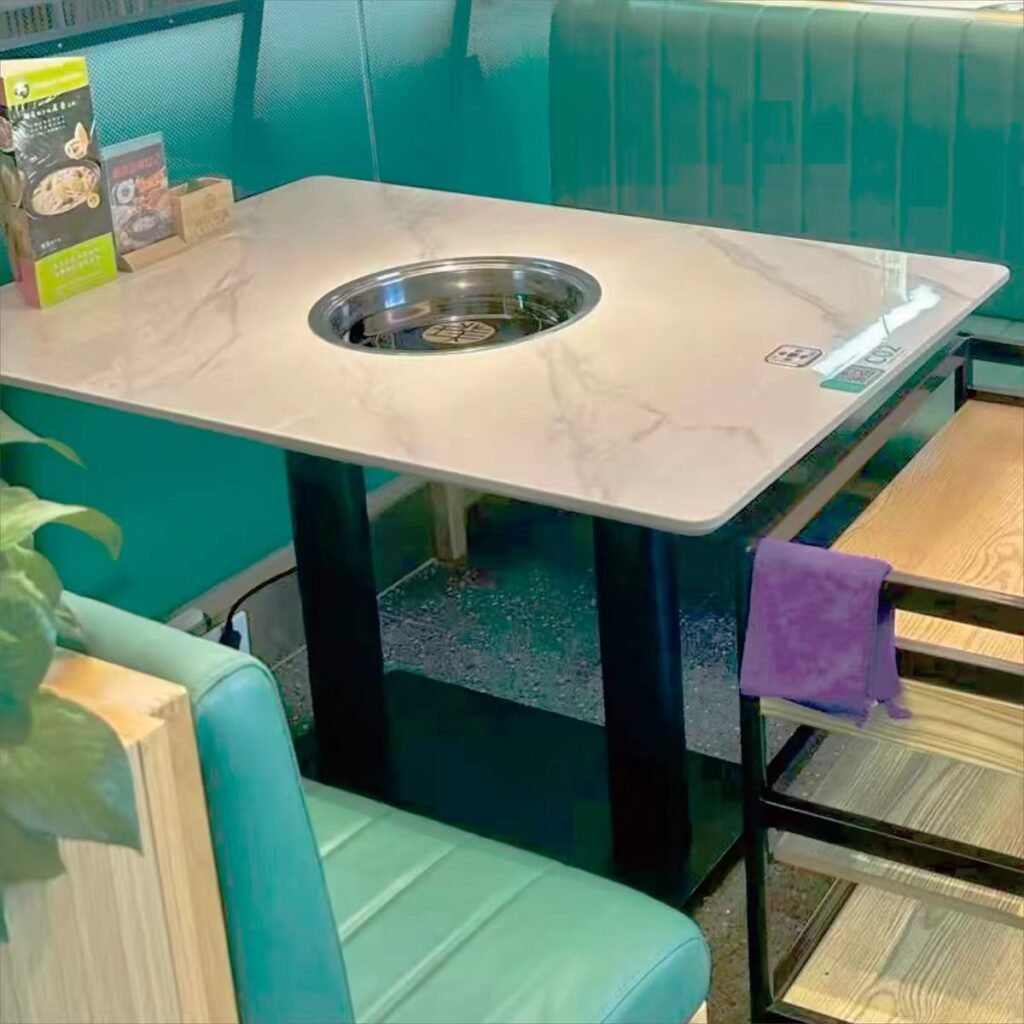
Core Needs of This Case: A hot pot restaurant owner in downtown Sydney plans to import a batch of commercial hot pot tables (20 cubic meters) and soda water (3 pallets, 4 cubic meters), requiring pickup from a Foshan manufacturer in China, full DDP sea freight mode, ensuring safe goods and controllable timeliness, and final delivery to the Sydney restaurant, balancing cost-effectiveness and compliance.
I. Sorting Out Core Information of the Case
1. Goods Details: 20 cubic meters of commercial hot pot tables (non-solid wood, no artificial marble material), 4 cubic meters of soda water in 3 pallets (beverage category, no added fruit juice, sugar, or flavoring);
2. Source of Goods: Hot pot tables are produced by a Foshan manufacturer, and soda water is from a compliant domestic food manufacturer;
3. Transportation Route: Foshan Manufacturer → Guangzhou Consolidation Warehouse → Guangzhou Nansha Port → Sydney Port → Sydney Downtown Hot Pot Restaurant;
4. Transportation Mode: LCL (Less than Container Load) sea freight DDP (Delivered Duty Paid), including full-process services such as domestic pickup, packaging, customs declaration, sea freight, Sydney customs clearance, and delivery;
5. Timeliness Guarantee: The whole process from domestic shipment to delivery at the Sydney restaurant takes about 25 days;
6. Core Difficulties: As a food item, soda water has strict customs clearance requirements; the material of hot pot tables must comply with Australian import regulations to avoid fumigation or import restriction risks.
II. Preparations: Material Confirmation + Transportation Plan Optimization to Avoid Core Risks
The core premise of sea freight import is “compliance”. Especially Australia has clear requirements on the materials of imported goods and food hygiene. Inadequate preparations in the early stage are likely to lead to goods detention, delays, or additional costs. In this case, we focused on 2 key preparation tasks.
(I) Strict Verification of Hot Pot Table Materials to Avoid Australian Import Restrictions
Australian Customs has strict controls on wooden goods and artificial marble: solid wood products require mandatory fumigation treatment (otherwise they will be detained and destroyed), and artificial marble has import restrictions, requiring material confirmation and relevant certificates in advance. To avoid risks, we conducted in-depth communication with the Foshan furniture manufacturer and the Sydney client, repeatedly verified the materials of the hot pot tables, confirmed that they contain neither solid wood nor artificial marble, and are ordinary furniture that can be transported normally, without the need for additional fumigation or special permits, avoiding the risk of non-compliant materials from the source.
Key Reminder Here: For furniture imported into Australia, it is crucial to confirm the materials in advance. If it contains solid wood (even a small amount of solid wood accessories), it is necessary to conduct fumigation treatment in advance and issue an IPPC fumigation certificate; if it involves artificial marble, it is necessary to consult Australian Customs in advance to confirm whether it meets the import standards, so as to avoid customs clearance failure due to material problems.
(II) Select the Optimal Transportation Plan Based on Cargo Characteristics
The total volume of goods in this case is 24 cubic meters (20 cubic meters of hot pot tables + 4 cubic meters of soda water), and the client is located in downtown Sydney. Considering cost and timeliness comprehensively, we finally determined the “LCL sea freight” mode, with 2 core advantages:
1. Cost Optimization: The Foshan manufacturer is only 50 kilometers away from the Guangzhou consolidation warehouse, resulting in low short-distance pickup costs; LCL transportation does not require bearing the cost of a full container, which is suitable for small and medium-sized batches of goods, greatly reducing the import and transportation costs for the Sydney hot pot restaurant owner, saving more than 30% of the cost compared with full container transportation;
2. More Compliant Separate Transportation: Soda water, as a food item, has very different customs clearance requirements from hot pot tables (ordinary furniture). Mixed shipment is likely to cause customs clearance delays. Therefore, we transported the two types of goods in two separate shipments: hot pot tables were declared as ordinary goods, and soda water was declared separately as food items, ensuring smooth customs clearance and avoiding mutual influence.
III. Practical Operation of the Entire DDP Sea Freight Process: From Pickup to Delivery, Fully Controllable
In this DDP sea freight operation, we controlled every link in the whole process to ensure that the goods directly reached the Sydney hot pot restaurant from the Foshan manufacturer without additional operations by the client, truly achieving “door-to-door” worry-free service. The specific process is disassembled as follows:
Step 1: Domestic Pickup + Packaging Reinforcement to Ensure Cargo Safety
We arranged professional pickup vehicles to pick up the hot pot tables from the Foshan manufacturer, tracked the pickup progress throughout the process to ensure the goods were intact. After the goods arrived at the Guangzhou consolidation warehouse, considering that hot pot tables are fragile and easy to be damaged by collision, we specially arranged personnel to provide customized wooden box packaging and reinforcement protection to prevent damage during transportation; soda water was packaged in accordance with food transportation standards to ensure moisture-proof and anti-damage, so as not to affect the quality of the beverage.
Step 2: Domestic Customs Declaration + Document Review to Ensure Compliant Export
The customs declaration link is the key to export. We arranged a professional customs declaration team to sort out the complete set of customs declaration documents (including commercial invoice, packing list, certificate of origin, etc.), and reviewed the document information in advance to avoid customs declaration delays caused by incorrect document filling. At the same time, with the advantage of the China-Australia Free Trade Agreement (ChAFTA), we applied for the Certificate of Origin FORM A for both types of goods, ensuring that the goods can enjoy the 0 tariff preference after arriving in Australia, further reducing the client’s import costs .
Step 3: Loading at Guangzhou Nansha Port with Real-Time Timeliness Tracking
After the documents were reviewed and customs declaration was released, the goods were loaded at Guangzhou Nansha Port. We provided real-time shipping schedule tracking service for the client, timely fed back the transportation status of the goods, and allowed the client to grasp the location of the goods at any time. Combined with the characteristics of the Australia sea freight route, we selected the optimal shipping schedule to ensure that the goods arrived at Sydney Port efficiently and stably, with controllable overall sea freight timeliness.
Step 4: Sydney Customs Clearance, Focusing on Solving Food Customs Clearance Difficulties
Customs clearance is the core link of DDP sea freight. Especially for soda water as a food item, it is necessary to strictly follow the customs clearance requirements of Australian DAFF/FSANZ. In this customs clearance, we focused on the special declaration of soda water. The specific required documents and precautions are as follows (hot pot tables are cleared as ordinary goods with a simpler process):
(I) Basic Trade Documents (Necessary for Customs Clearance)
1. Bill of Lading (BL): Clarifies the goods transportation information and consignor/consignee information, which is the core document for customs clearance;
2. Commercial Invoice: Detailedly indicates the name, quantity, unit price, total price, CIF/FOB price, country of origin (China), and information of both the buyer and the seller of the soda water to ensure true and accurate information;
3. Packing List: Indicates the quantity, gross weight, net weight, volume, and carton number of each carton of soda water, which is completely consistent with the actual goods;
4. Certificate of Origin FORM A: A necessary document for enjoying the 0 tariff under the China-Australia Free Trade Agreement, which must be issued by the official ;
5. Importer Information: Provides the Australian company name, ABN, address, and contact information of the Sydney hot pot restaurant to ensure normal connection during customs clearance.
(II) Special Documents for Food/Beverages (Mandatory Review by DAFF/FSANZ)
1. Health Certificate: Issued by the official, clarifying that the soda water meets the commercial sterility standard, contains no pathogenic bacteria, and complies with the hygiene requirements for imported food in Australia, which is one of the core review documents for food customs clearance;
2. Certificate of Analysis (CoA): Issued by an ISO 17025 laboratory, including at least the following items: microorganisms (total bacterial count, coliforms, pathogenic bacteria), heavy metals (lead, mercury, arsenic, etc.), additives (usually none for soda water), and allergens (none for soda water), to ensure product safety and compliance;
3. Final English Label Sample: Must be fully in English, including: product name (such as Soda Water / Carbonated Water), ingredient list (Water, Carbon Dioxide), net content (such as 500 mL), nutritional information panel (per 100 mL: 0 kJ, 0 g sugar, etc.), shelf life (Best Before: DD/MM/YYYY), country of origin (Product of China), and Australian importer’s name + address + ABN. The allergen statement must clearly indicate “Contains no allergens”, and the font of the allergen statement must be bold and not smaller than the font size of other texts;
4. Production Enterprise Qualifications: Provide a copy of the Food Production License (stamped), and FSANZ registration (if applicable) to ensure the compliance of the production enterprise.
(III) Australian Customs/Biosecurity Declaration Documents
1. Food Import Declaration (FID): Submitted by the customs clearance agent in the ICON/BICON system, which is a necessary declaration document for imported food items;
2. Import Declaration (N10): Since the value of this batch of soda water exceeds 1,000 Australian dollars, it must be submitted in the ICS system and reviewed by the Australian Border Force ;
3. Packing Declaration: This batch of soda water does not use wooden packaging, so no fumigation certificate is required; if wooden packaging is used, an IPPC-marked fumigation certificate must be provided additionally.
(IV) Special Notes for Soda Water Customs Clearance (Different from Ordinary Beverages)
Unlike ordinary beverages, soda water does not require an alcohol license, WET tax documents, or pregnancy warnings from the Australian Border Force; the label must clearly indicate sugar-free, caffeine-free, and no allergens, without additional warning words; the ingredients can only be water + carbon dioxide, and no fruit juice, sugar, or flavoring is allowed (unless clearly marked), to avoid customs clearance failure due to non-compliant ingredients.
Step 5: Sydney Delivery, Direct to the Restaurant, Avoiding Unloading Risks
After customs clearance, we arranged a local cooperative logistics in Sydney to deliver the hot pot tables and soda water to the client’s hot pot restaurant in downtown Sydney in batches. Before delivery, we reminded the client in advance: confirm whether parking and unloading are allowed at the entrance of the restaurant. If parking is not allowed, the consignee needs to prepare an alternative receiving address to avoid delivery delays caused by unloading problems, ensuring the goods are delivered smoothly and completed the handover.
IV. Case Summary: Core Points of DDP Sea Freight for Sydney Hot Pot Restaurant Imports
The DDP sea freight operation for importing hot pot tables and soda water by the Sydney hot pot restaurant was successfully completed in about 25 days without any delays or goods detention. The core lies in grasping 3 key points:
1. Compliance First: Verify the goods materials in advance (avoid Australian import restrictions), and strictly prepare the complete set of customs clearance documents for food items, especially English labels and health certificates, to ensure compliance with the requirements of Australian DAFF/FSANZ and Customs ;
2. Plan Optimization: Combine the volume and characteristics of the goods, select LCL transportation + separate shipment declaration, which not only reduces costs but also avoids mutual influence of different types of goods on customs clearance; take advantage of the China-Australia Free Trade Agreement to apply for Certificate of Origin FORM A and enjoy 0 tariff preference, further reducing costs ;
3. Full-Process Control: Track every link from domestic pickup, packaging, and customs declaration to sea freight, customs clearance, and delivery, predict risks in advance (such as unloading problems), and communicate and solve them in a timely manner to ensure the client is worry-free throughout the process.
For catering entrepreneurs in Sydney and other Australian cities, importing catering equipment and food from China, choosing a professional DDP sea freight service can not only save time and costs but also avoid various risks in customs clearance and transportation, allowing entrepreneurs to focus on restaurant operations without being distracted by goods import.